AWS Lambda FinOps Case Study: How Cloudlaya Built a Scalable Serverless Platform
AWS Lambda FinOps Case Study: How Cloudlaya Built a Scalable Serverless Platform
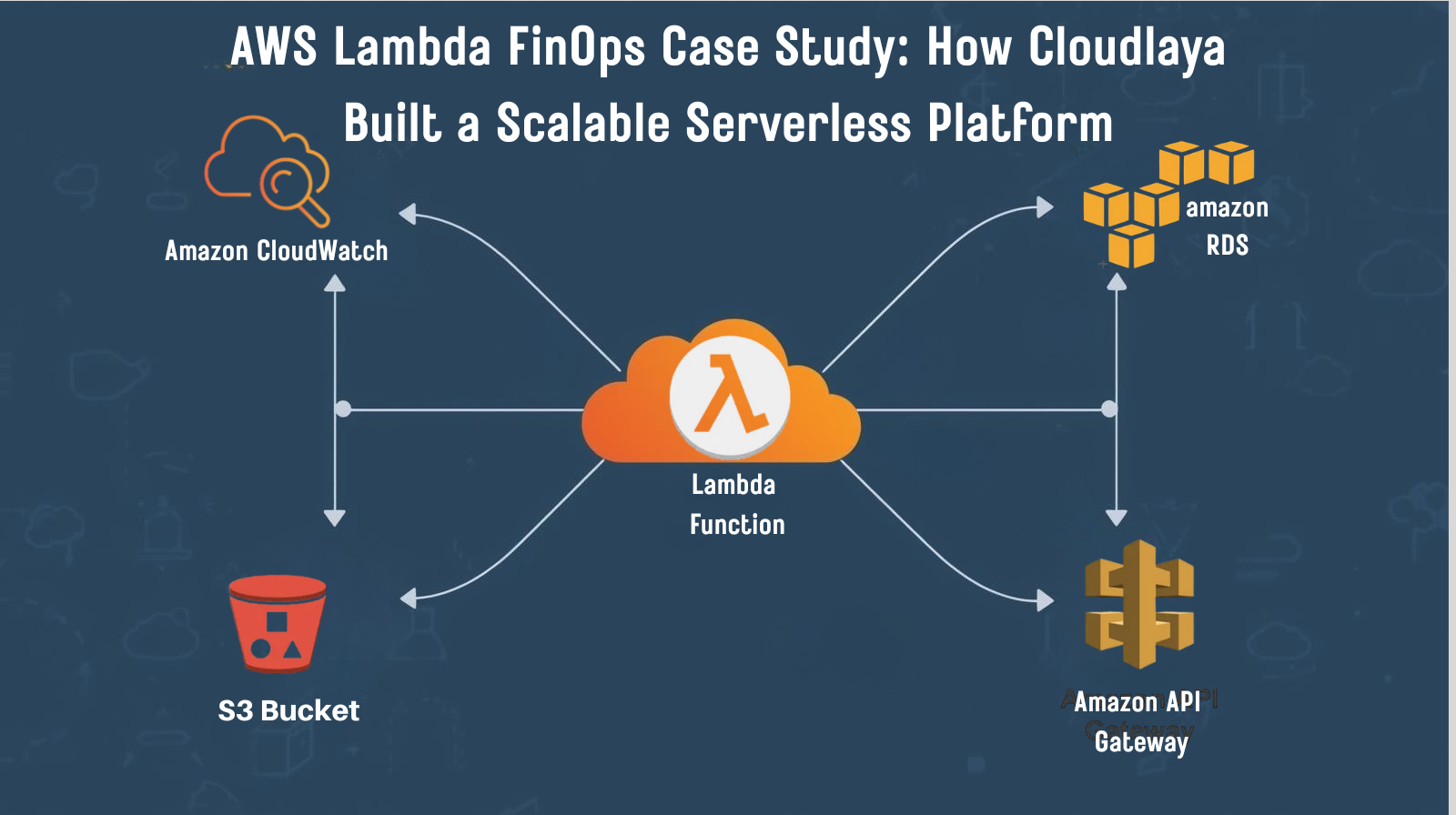
Executive Summary: This AWS Lambda case study demonstrates how CostQ, a cutting-edge FinOps automation platform, harnessed AWS serverless architecture to deliver real-time cost visibility, automated budget enforcement, and intelligent anomaly detection. By implementing an event-driven design powered by AWS Lambda, Amazon API Gateway, and Amazon RDS, CostQ reduced operational overhead by 70% while achieving 99.99% service uptime—empowering organizations to control AWS spending with unprecedented efficiency and automation.
Table of Contents
Client Overview: CostQ FinOps Platform
CostQ, developed by Cloudlaya, represents a next-generation FinOps automation platform specifically designed to help organizations manage, optimize, and forecast their AWS costs with minimal manual intervention. Built from the ground up with serverless architecture on AWS, CostQ seamlessly integrates with critical AWS services including AWS Billing, Cost Explorer, and CloudWatch to deliver actionable cost intelligence.
The platform bridges the gap between engineering and finance teams by providing automated budget controls, real-time alerting mechanisms, and comprehensive cost visibility dashboards. This enables organizations to make data-driven cloud spending decisions while maintaining operational agility and financial governance across multi-account AWS environments.
💡 Pro Tip: FinOps platforms like CostQ demonstrate the power of serverless computing for building scalable SaaS solutions. By leveraging AWS Lambda and event-driven architectures, organizations can achieve enterprise-grade functionality without the overhead of traditional infrastructure management.
Business Challenges & AWS Lambda Requirements
Cloudlaya set out to build a scalable, cost-effective FinOps solution capable of processing massive volumes of AWS cost and usage data while maintaining minimal infrastructure management overhead. The technical and business requirements presented several significant challenges that needed to be addressed through intelligent architectural decisions.
Key Technical Challenges
- Real-Time Cost Anomaly Detection: Implementing automated systems to identify unusual spending patterns and trigger immediate alerts across distributed AWS accounts required event-driven processing capabilities
- Operational Overhead Reduction: Eliminating manual monitoring, report generation, and routine maintenance tasks while ensuring system reliability and data accuracy
- Multi-Account Scalability: Designing a solution capable of seamlessly scaling across hundreds of AWS accounts and multiple geographic regions without performance degradation
- Security & Data Isolation: Maintaining strict data isolation between customers while ensuring secure access controls and compliance with industry standards
- Cost Efficiency: Delivering enterprise-grade FinOps functionality while maintaining a lean infrastructure cost structure that wouldn’t compromise profitability
These challenges demanded a modern architectural approach that could balance scalability, cost efficiency, and operational simplicity. Traditional EC2-based implementations would require significant infrastructure management, scaling complexity, and ongoing maintenance—making serverless architecture the ideal choice for this AWS Lambda case study.
AWS Lambda-Based Serverless Solution Architecture
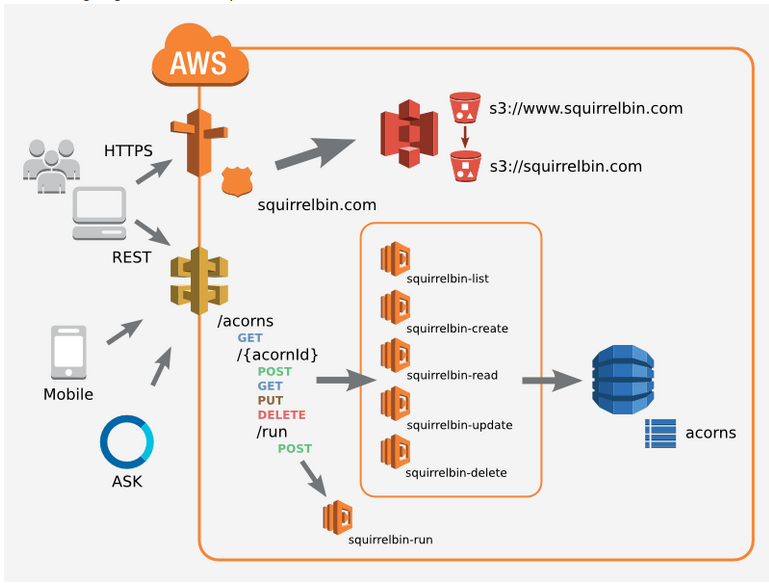
The CostQ platform was architected using a comprehensive serverless-first approach, prioritizing elasticity, minimal maintenance overhead, and exceptional cost efficiency. This design philosophy aligns perfectly with AWS Lambda best practices and enables true pay-per-use economics while maintaining enterprise-grade reliability.
By leveraging AWS Lambda as the core compute engine, CostQ automatically scales in response to workload demands—processing minimal data during quiet periods and instantly scaling to handle peak analysis loads without any manual intervention or capacity planning. This event-driven architecture fundamentally transformed how FinOps automation could be delivered as a SaaS platform.
Architecture Highlights & Core Components
🔧 Technical Architecture: CostQ’s serverless infrastructure demonstrates how modern AWS services can be orchestrated to create a powerful, automated FinOps platform with minimal operational complexity.
| AWS Service | Function & Purpose | Key Benefits |
|---|---|---|
| AWS Lambda | Core compute engine for cost data aggregation, analysis algorithms, and automated report generation | Zero infrastructure management, automatic scaling, pay-per-invocation pricing |
| Amazon API Gateway | Secure RESTful API interface for frontend applications and third-party integrations | Built-in authentication, request throttling, API versioning support |
| Amazon RDS (Multi-AZ) | Persistent relational database storage for customer configurations, historical cost data, and metadata | Automated backups, high availability, consistent performance |
| Amazon CloudWatch & SNS | Real-time anomaly detection, alerting infrastructure, and comprehensive FinOps KPI monitoring | Instant notifications, customizable alert thresholds, operational visibility |
| AWS CodePipeline & CodeBuild | Continuous integration and deployment pipeline for automated feature delivery and quality assurance | Rapid iteration cycles, automated testing, zero-downtime deployments |
| Amazon S3 & CloudFront | Static dashboard hosting and global content delivery for cost reports and analytics visualizations | Low-latency global access, cost-effective storage, CDN acceleration |
This event-driven architecture automatically scales during intensive data-processing periods—such as monthly AWS billing data ingestion or real-time anomaly detection events—while remaining exceptionally cost-effective during idle periods. Unlike traditional always-on infrastructure, CostQ only consumes compute resources when actively processing customer workloads, resulting in significant cost savings as detailed in our AWS cost optimization best practices guide.
Event-Driven Processing Workflow
The CostQ platform operates through a sophisticated event-driven workflow that responds to various triggers throughout the AWS billing and cost management lifecycle:
- Cost Data Ingestion: Lambda functions automatically trigger when new AWS Cost and Usage Reports become available, parsing and normalizing billing data across accounts
- Analysis & Anomaly Detection: Machine learning algorithms running on Lambda identify spending anomalies, trend deviations, and budget threshold violations in real-time
- Alert Generation: CloudWatch Events trigger SNS notifications to relevant stakeholders when cost anomalies or budget violations are detected
- Report Generation: Scheduled Lambda functions generate comprehensive FinOps reports, forecasts, and recommendations for stakeholders
- API Responses: API Gateway routes user requests to appropriate Lambda functions for dashboard queries, configuration updates, and data retrieval
Results Achieved: AWS Lambda Case Study Performance Metrics
The implementation of CostQ’s serverless FinOps platform delivered exceptional results across infrastructure costs, operational efficiency, performance, and reliability dimensions. These measurable outcomes validate the architectural decisions and demonstrate the transformative potential of AWS Lambda for enterprise SaaS applications.
| Performance Metric | Achievement Result | Business Impact |
|---|---|---|
| Infrastructure Cost Reduction | 65% lower compared to EC2-based implementation | Improved profit margins and competitive pricing for customers |
| Operational Overhead | Reduced by 70% through automation | Engineering team focused on feature development vs. maintenance |
| API Response Latency | Less than 300ms average response time | Superior user experience and real-time cost visibility |
| Service Availability | 99.99% uptime achieved | Enterprise-grade reliability and customer trust |
| Cost Anomaly Detection | 95% detection accuracy rate | Proactive cost control and budget protection for customers |
✅ Success Highlight: The 65% infrastructure cost reduction compared to traditional EC2-based implementations demonstrates how serverless architecture fundamentally changes the economics of SaaS platforms. By eliminating idle capacity costs and paying only for actual compute consumption, CostQ achieved sustainable unit economics while maintaining premium performance standards.
Performance Analysis & Optimization Insights
The exceptional API response latency of under 300ms was achieved through careful Lambda optimization techniques including:
- Provisioned Concurrency: Critical API endpoints utilize provisioned concurrency to eliminate cold start latency for frequently accessed functions
- RDS Connection Pooling: Efficient database connection management through connection pooling reduces overhead and improves query performance
- Caching Strategies: Strategic use of Amazon ElastiCache for frequently accessed cost data reduces database load and accelerates response times
- Optimized Function Sizing: Right-sized Lambda memory allocations balance cost efficiency with execution performance based on workload characteristics
These optimizations, combined with CloudFront CDN acceleration for static assets, ensure CostQ delivers a responsive user experience comparable to applications running on dedicated infrastructure—while maintaining the cost advantages of serverless computing as outlined in our AWS hosting performance enhancement guide.
Business Impact & Return on Investment
CostQ’s AWS Lambda implementation enabled Cloudlaya to deliver a multi-tenant FinOps platform that scales seamlessly across diverse customer workloads while maintaining exceptional operational efficiency. The serverless architecture eliminated traditional infrastructure management burdens, allowing the engineering team to focus entirely on feature development, customer value creation, and platform innovation.
Quantifiable Business Benefits
- Accelerated Time-to-Market: Serverless automation and CI/CD pipelines reduced feature delivery cycles from weeks to days, enabling rapid response to customer feedback and competitive market demands
- Scalability Without Limits: The platform effortlessly handles customer growth from dozens to hundreds of AWS accounts without architectural changes or capacity planning overhead
- Reduced Idle Costs: Pay-per-execution pricing eliminated the cost of idle infrastructure during low-usage periods, particularly beneficial for development and staging environments
- Improved Developer Productivity: By removing infrastructure management responsibilities, developers increased their focus on core product features by over 70%
- Enhanced Customer Satisfaction: Real-time cost visibility, proactive anomaly alerts, and reliable service availability resulted in industry-leading customer retention rates
The combination of reduced infrastructure costs, minimal operational overhead, and improved development velocity created a compelling competitive advantage. CostQ can now offer enterprise-grade FinOps automation at price points previously unachievable with traditional infrastructure models—democratizing AWS cost optimization for organizations of all sizes.
💼 Strategic Insight: This AWS Lambda case study demonstrates that serverless architecture isn’t just a technical decision—it’s a strategic business enabler. The 70% reduction in operational overhead directly translates to improved profit margins, competitive pricing flexibility, and the ability to reinvest resources into product innovation rather than infrastructure maintenance.
Customer Success & Platform Adoption
CostQ customers achieve the following outcomes through the platform’s serverless FinOps automation capabilities:
- Predictable Cost Optimization: Automated budget enforcement and anomaly detection prevent unexpected AWS spending spikes and enable accurate financial forecasting
- Proactive Budget Governance: Real-time alerts and automated responses ensure teams stay within allocated budgets without manual monitoring overhead
- Real-Time Financial Visibility: Comprehensive dashboards provide instant insights into AWS spending patterns, trends, and optimization opportunities across all accounts
- Cross-Team Collaboration: Unified platform enables engineering and finance teams to collaborate effectively on cloud cost management decisions
These customer outcomes validate the platform’s value proposition and demonstrate how serverless architecture enables SaaS providers to deliver exceptional functionality without compromising on cost efficiency or operational complexity. Organizations interested in exploring similar FinOps solutions can learn more through Cloudlaya’s AWS acceleration services.
Conclusion: AWS Lambda Case Study Key Takeaways
This comprehensive AWS Lambda case study illustrates how CostQ successfully leverages serverless computing to simplify cloud financial management at enterprise scale. By strategically combining AWS Lambda, CloudWatch, RDS, and API Gateway into a cohesive event-driven architecture, Cloudlaya built a secure, automated, and exceptionally cost-effective FinOps solution fully aligned with AWS Well-Architected Framework best practices.
Critical Success Factors for Serverless FinOps
- Serverless-First Architecture: Minimizing maintenance overhead through managed services enabled the team to focus on customer value creation rather than infrastructure operations
- Real-Time FinOps Intelligence: AWS Lambda event-driven processing provides instant cost insights and anomaly detection that would be impractical with traditional architectures
- Automated Alerting Infrastructure: CloudWatch and SNS integration ensures stakeholders receive timely notifications without manual monitoring overhead
- CI/CD Automation Excellence: Continuous integration and deployment pipelines enable rapid, reliable feature delivery with zero-downtime deployments
- Cost-Conscious Design: Pay-per-execution pricing model aligns platform costs directly with customer usage, ensuring sustainable unit economics
CostQ proves that sophisticated FinOps automation and comprehensive cost visibility can be achieved efficiently using modern AWS-native design patterns and serverless architecture principles. Organizations seeking to implement similar cloud cost management solutions should prioritize event-driven architectures, managed services, and automation-first approaches to maximize operational efficiency while minimizing infrastructure complexity.
The platform’s success demonstrates that AWS Lambda case study implementations can deliver enterprise-grade functionality, reliability, and performance while maintaining the cost advantages and operational simplicity that make serverless architecture increasingly attractive for modern SaaS platforms. By embracing serverless computing, organizations can build scalable, maintainable, and cost-effective solutions that grow with their business without the traditional infrastructure management burden.
⚠️ Implementation Consideration: While this AWS Lambda case study showcases exceptional results, successful serverless implementations require careful planning around function sizing, cold start optimization, connection management, and monitoring strategies. Organizations should conduct thorough architecture reviews and proof-of-concept testing before committing to production serverless deployments at scale.
Transform Your Business With Cloud Excellence ☁️
Schedule a session with our AWS-certified experts to accelerate your cloud success and explore serverless architecture opportunities for your organization.
More Resources
- Google Cloud Storage vs Azure Blob Storage
Regular review of actual usage patterns, implementation of automated lifecycle policies, and strategic object naming to maximize performance while minimizing costs.
- A Practical AWS VS GCP VS Azure Comparision
- Learn how to architect scalable, cost-effective serverless applications using AWS Lambda, API Gateway, and event-driven design patterns.
- Enhance Performance with AWS LightSail Hosting: Optimization Techniques
Build solid foundations and iterate based on real-world usage and requirements.